
Banknote Disinfection Systems
A dedicated treatment step for your cash handling operation.
Banknote disinfection for cash processing
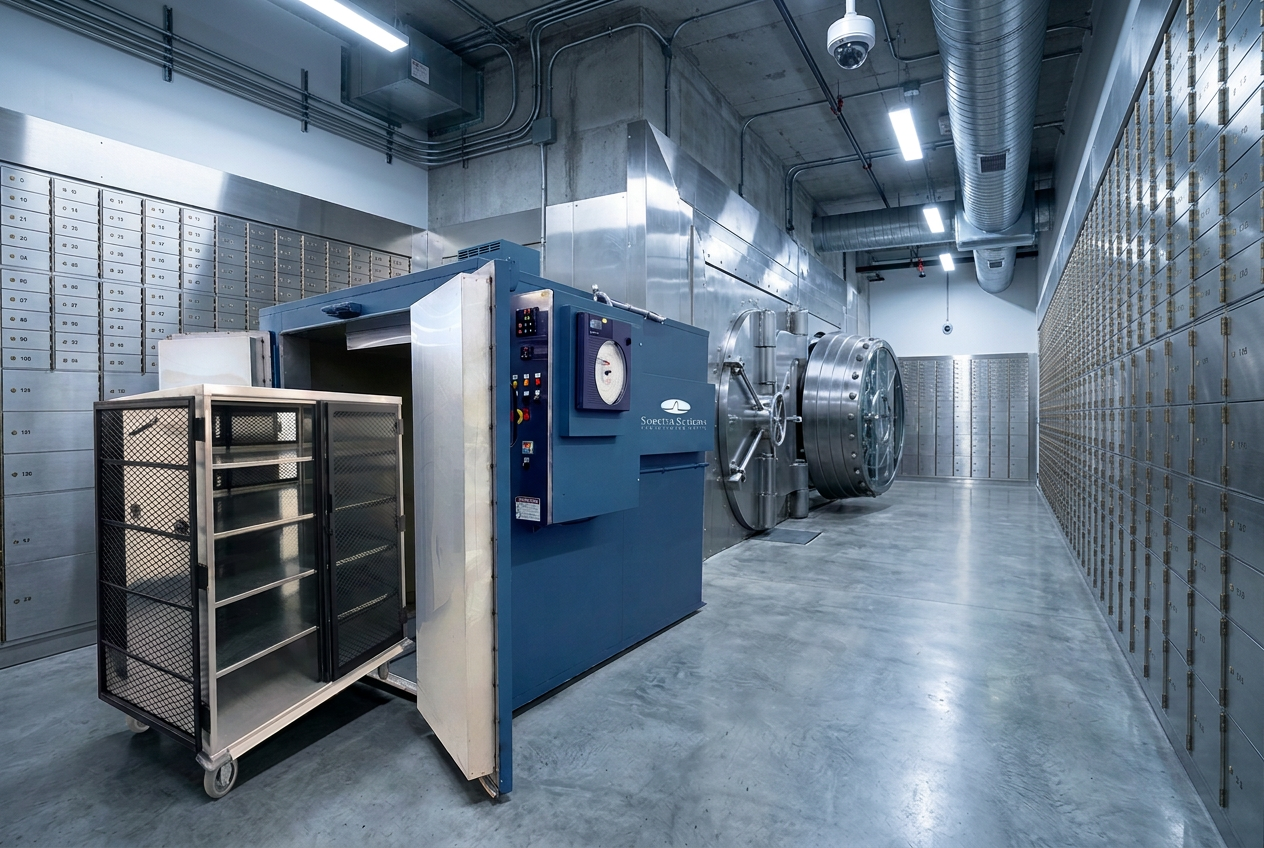
At Royal Dutch Kusters Engineering, we help you assess banknote disinfection for your cash handling operation. In cooperation with Spectra Systems, we offer the BDS-1000 for central banks, commercial banks, casinos and other institutions preparing currency for recirculation. The system is designed for disinfection, rather than the removal of soiling.
Disinfect banknotes while preserving their security features
The BDS-1000 combines heat with an oxygen-free nitrogen atmosphere. Removing oxygen limits the material damage that can occur when banknotes are heated in ordinary air.
For your operation, suitability depends on the banknote materials, security features and loading conditions. Our team can discuss these requirements with you before you select a treatment setup.
Why banknote disinfection?
Meet hygiene objectives
Address banknote contamination when your organisation requires currency to be disinfected before further handling.
Retain usable currency
Keep otherwise fit banknotes available for recirculation when contamination is the reason for treating them.
Bring treatment in-house
Make banknote disinfection part of your own facility’s cash handling procedures.
Designed to preserve banknote integrity
We work with Spectra Systems to bring you a dedicated banknote disinfection solution. Assess the treatment against your currency materials and handling requirements with our specialists.
Load banknotes in their handling format
The BDS-1000 accommodates loose, strapped, bagged and shrink-wrapped banknotes. A wheeled cart and ramp support transfer into the treatment chamber.
Discuss your bundle sizes and packaging with us so the loading arrangement can be assessed for your operation.
Assess compatibility with your currency
Testing reported in March 2021 found no impairment of the tested substrates, inks, threads, holograms, fluorescent features, fibres or planchettes at temperatures up to 130°C when oxygen was absent.
The tested cotton and polymer notes showed no brittleness or other reported negative effects after treatment. Heating can remove moisture, so these findings should be considered alongside your banknote specifications and processing requirements.
How banknote disinfection works
A built-in nitrogen generator extracts oxygen from room air and continuously supplies the treatment chamber. Positive pressure maintains the oxygen-free atmosphere while heat is used to inactivate viruses and other pathogens.
The March 2021 BDS-1000 technology profile describes treatment at 100–130°C, with approximately 60–90 minutes for heat to penetrate banknote bundles. The centre of a bundle heats more slowly than its outer layers, making temperature, loading and exposure time important treatment parameters.
Nitrogen can diffuse through shrink wrap, and its permeability increases with temperature. We can help you assess the appropriate treatment conditions for your banknotes and packaging.
Product features and benefits
Review the BDS-1000's operating characteristics for your facility. The technical values below are drawn from the technology profile published in March 2021; confirm the proposed configuration and performance with our team.
Process large volumes
Reported capacity is approximately 5 million banknotes per hour, subject to loading and treatment conditions.
Generate nitrogen on site
An integrated generator supplies nitrogen from room air, with no external gas cylinders required.
Preserve security features
Reported tests found the tested substrates and security elements unaffected up to 130°C in an oxygen-free atmosphere.
Treat multiple formats
Accommodate loose, strapped, bagged and shrink-wrapped banknotes.
Skip treatment consumables
The heat-based disinfection process requires no consumable treatment materials.
Load with cart and ramp
A wheeled cart and ramp support the transfer of banknotes into the treatment chamber.
Discuss your banknote disinfection requirements
Share your banknote materials, processing volumes, and handling procedures so our experts can help you assess suitability for your facility.